Data Analysis With AI
AI Fluency for nonprofits
What you'll learn
Estimated time: 50 minutes
By the end of this lesson you'll be able to:
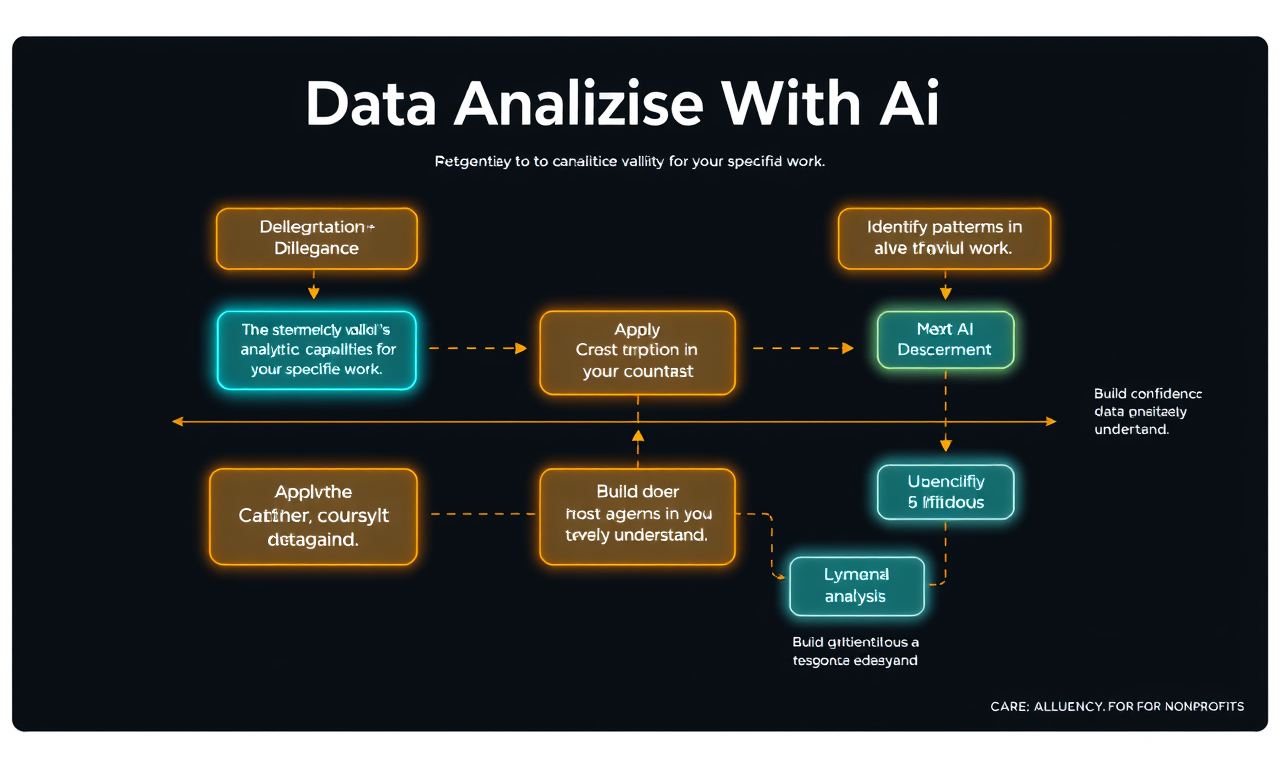
- Use the Delegation-Diligence loop to systematically validate AI's analytical capabilities for your specific work
- Apply Description and Discernment to identify patterns in your data while recognizing AI's limitations
- Build confidence in AI-assisted analysis by testing against data you already understand
Data analysis with AI
(7 minutes)
This video addresses a critical question that nonprofit professionals face when using AI for data analysis: How do I know I can trust the results? You'll follow Rio, a program director at Valley Veterans Services, as he uses the Delegation-Diligence loop to systematically validate AI's analytical capabilities using past data where he already knows the answers. The video demonstrates how to build confidence through testing, identify capability gaps, and develop an approach you can apply to new data with confidence.
Key takeaways
- Test AI against data you already understand: Before trusting AI with new analysis, validate it using past data where you know the correct results. If AI can match your known results with the right guidance, you can confidently use it for similar future tasks
- Use Discernment to identify gaps in AI's reasoning: As you test, note where AI misses important context and what additional Description you need to provide
- Build validated approaches, not blind trust: Each testing round teaches you what AI does well and where it needs guidance. Document what works so you can replicate it
- AI can help even if you're not data-savvy: If you're not comfortable with data analysis yourself, AI can help brainstorm solutions, write Excel formulas, and reformat messy data—just keep asking for clarifications so you understand the process
- Validation builds confidence but doesn't eliminate responsibility: You're still accountable for checking that results make sense and being transparent about AI's role
Exercise 1: Messaging analysis
This exercise uses lower-stakes data (your own public communications) to practice the Description-Discernment loop for data analysis.
Part I: Gather your data
Collect 10-20 examples of your organization's communications—social media posts, email subject lines, newsletter headlines, or event announcements. Include a mix of what you consider high-performing and lower-performing content.
Part II: Analyze with AI
Share your dataset with AI and ask it to identify patterns:
- What themes or topics appear in your higher-performing content?
- What language, tone, or formatting patterns emerge?
- Are there any gaps between what you communicate and what resonates?
Part III: Apply Discernment
Evaluate AI's analysis:
- Do the identified patterns match your intuition about what works?
- What context is AI missing about your audience or goals?
- Are there patterns AI identified that surprise you?
Reflection:
- What are you trying to learn from your dataset?
- How does higher-performing content align with your authentic voice and organizational values?
- Are you reaching the right audience?
Stretch goal: Use AI to audit how your messaging compares with your organization's stated mission and values, find discrepancies, and create a messaging guide from the analysis.
Exercise 2: Analyzing donor giving patterns
This exercise applies data analysis skills to high-stakes fundraising data, building on the data hygiene practices from Lesson 5.
Part I: Prepare your data
Use the sanitized donor dataset from Lesson 5, or prepare a new one by removing personally identifiable information. Ensure you have historical giving data across multiple time periods.
Part II: Analyze with AI
Ask AI to identify patterns in:
- Donor retention rates over time
- Recurring vs. one-time donation patterns
- Campaign effectiveness comparisons
- Giving trends by amount ranges
Part III: Apply Discernment
Critically evaluate AI's findings:
- Do the trends match what you know about your donor base?
- Is AI only focusing on monetary value, missing relationship factors?
- What patterns would help strengthen donor relationships, not just maximize revenue?
Reflection:
- What might the costs of implementing efficiency recommendations be? (e.g., If findings suggest focusing on major donors at the expense of small donors, what's the impact on community perception or long-term sustainability?)
- What patterns would help strengthen relationships with donors beyond just giving amounts?
Exercise 3: Trend analysis to anticipate community needs (stretch goal)
This advanced exercise combines multiple data sources to practice predictive analysis—a highly requested capability.
Part I: Gather diverse sources
Collect information you already use to understand community needs:
- Your own program data and service requests
- External reports or datasets about your community
- News or policy developments affecting your constituents
Part II: Analyze for emerging patterns
Ask AI to help you identify:
- Trends in the types of support people are requesting
- External factors that might increase or change demand
- Gaps between current services and emerging needs
Part III: Apply rigorous Discernment
This analysis requires the highest level of critical evaluation:
- How do AI's predictions compare with your direct community experience?
- What systemic factors or local context might AI be missing?
- What values do you need to keep in mind as you anticipate community needs with dignity and respect?
Reflection:
- How can you approach this process responsibly?
- What factors and systemic issues can explain or contextualize what AI cannot?
Lesson reflection
- How did testing AI against data you already understood change your confidence in using it for new analysis?
- What gaps or limitations did you identify that will shape how you delegate data analysis tasks in the future?
What's next
In the next lesson, we'll look at workflow automation—how to apply these same principles when AI handles routine tasks on your behalf, freeing up your time for higher-impact work.
Feedback
As you progress through the course, we'd love to hear from you about how you are using concepts from the course in your work and any feedback you may have. Share your feedback here.
Acknowledgments and license
Copyright 2025 Anthropic and Giving Tuesday. Based on the AI Fluency Framework developed by Prof. Rick Dakan (Ringling College of Art and Design) and Prof. Joseph Feller (University College Cork). Released under the CC BY-NC-SA 4.0 license.