Understanding Privacy And Data
AI Fluency for nonprofits
What you'll learn
Estimated time: 30 minutes
By the end of this lesson you'll be able to:
- Articulate privacy concerns and evaluate AI tools based on their data handling policies
- Practice data hygiene strategies for safely working with sensitive information
Understanding privacy and data
(10 minutes)
This video addresses one of the most common concerns nonprofit professionals have about AI: data privacy. You'll learn what actually happens to data you share with AI tools, how to evaluate different platforms and plans for their privacy protections, and how to prepare sensitive data for safe AI use.
Key takeaways
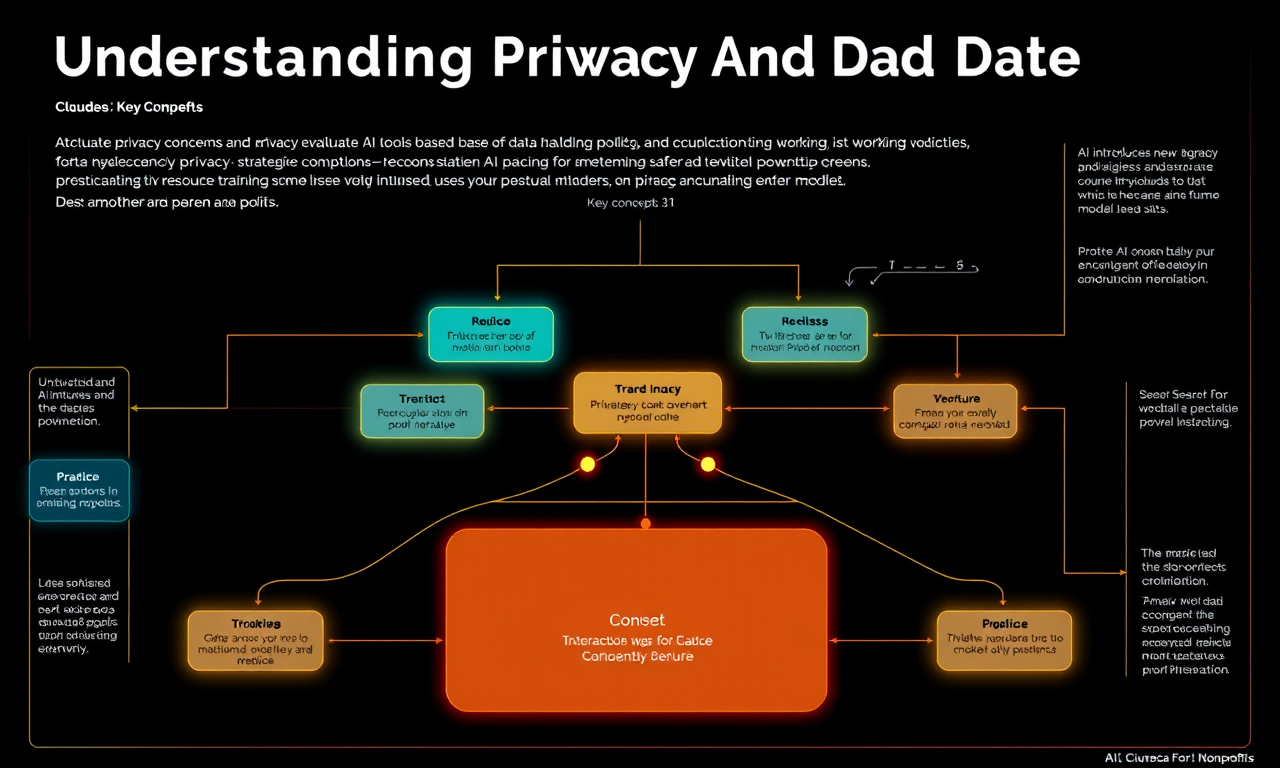
- AI introduces new privacy considerations—particularly around training: Some AI uses your inputs to train future models, which means patterns from your data could influence future outputs.
- Different tools have different rules: The free AI you use to brainstorm event themes is not the same as a paid account with strict data retention policies. Match your tool to your task—tools with more protection allow for safer sharing of sensitive data.
- Safe AI use isn't about avoiding it—it's about using it responsibly: Apply Problem Awareness and Platform Awareness before starting a new project. Often you can get full benefit from AI without sharing sensitive information by breaking tasks into component parts
- You can often remove identifying information entirely: For pattern analysis, you likely don't need names, contact details, or other PII. Work backwards from your actual goal to determine what data is truly necessary
- If something goes wrong, you have options: Delete the conversation, request data deletion through the platform's privacy process, and follow your organization's protocols
A note on Claude's privacy settings
For Claude specifically, you can find detailed data policy information at privacy.anthropic.com and trust.anthropic.com. You can adjust your privacy settings directly in the Claude app, including opting out of having your conversations used for training. Other AI providers should have similar resources—if they don't, that may be a red flag.
Exercise 1: Evaluating data sensitivity
This exercise helps you develop judgment about what data is safe to share with AI tools.
Part I: Review sample data
Choose one of the following scenarios that's most relevant to your work:
- A spreadsheet of donor giving history with names, amounts, and contact information
- Survey responses from program participants including demographic details
- A grant report draft containing beneficiary stories and outcome data
Part II: Annotate for sensitivity
For your chosen scenario, identify:
- Which fields or sections contain personally identifiable information (PII)?
- Which information is essential for the analysis you want to do?
- Which information could be removed or anonymized without losing analytical value?
- What's the worst-case scenario if this data were exposed?
Part III: Plan your approach
- What would you remove or modify before sharing with AI?
- What tool/plan tier would be appropriate for this level of sensitivity?
- What verification steps would you take after receiving AI's analysis?
Exercise 2: Practicing data hygiene
This exercise walks you through actually preparing sensitive data for safe AI use.
Part I: Choose your document
Select a real document from your work that contains some sensitive information (or create a realistic sample). This could be:
- A program report with client details
- A donor communication draft referencing specific giving amounts
- Meeting notes that mention staff or volunteer names
Part II: Sanitize the document
Work through the document and:
- Replace names with generic identifiers (Person A, Donor 1, etc.)
- Remove or generalize location details if not essential
- Strip contact information entirely
- Consider whether specific dollar amounts need to be exact or could be ranges
Part III: Test with AI
Share your sanitized document with AI and ask a question relevant to your work. Reflect:
- Did removing identifying information limit AI's ability to help you?
- What additional context did you need to provide to compensate?
- Are you comfortable with the level of information you shared?
Lesson reflection
- How does thinking about AI privacy compare to how you already think about other software tools (email, cloud storage, CRMs)?
- What's one change you'll make to how you approach sharing data with AI based on this lesson?
What's next
In the next lesson, we'll put these privacy practices into action as we explore data analysis with AI—learning how to spot patterns, generate insights, and strengthen your programs while keeping sensitive information protected.
Feedback
As you progress through the course, we'd love to hear from you about how you are using concepts from the course in your work and any feedback you may have. Share your feedback here.
Acknowledgments and license
Copyright 2025 Anthropic and Giving Tuesday. Based on the AI Fluency Framework developed by Prof. Rick Dakan (Ringling College of Art and Design) and Prof. Joseph Feller (University College Cork). Released under the CC BY-NC-SA 4.0 license.